Oracle EBS Integrations: Integrated SOA Gateway, REST Services & Connecting EBS to the Modern Stack (2026)

Oracle EBS Integrations: Integrated SOA Gateway, REST Services & Connecting EBS to the Modern Stack (2026)

  • Share This:

Oracle EBS Integrations: Integrated SOA Gateway, REST Services and Connecting EBS to the Modern Stack

Oracle E-Business Suite rarely runs alone. It feeds banks, tax portals, warehouses, CRMs and analytics. How you connect it decides whether those integrations are maintainable — or a tangle of nightly files nobody dares touch.

EBS has more integration options than most teams use

Many EBS estates still move data by flat file and database link because that is how it was done in 2010. EBS 12.2 offers far better, and the right choice depends on whether the exchange is real-time or batch, and who initiates it.

The Integrated SOA Gateway

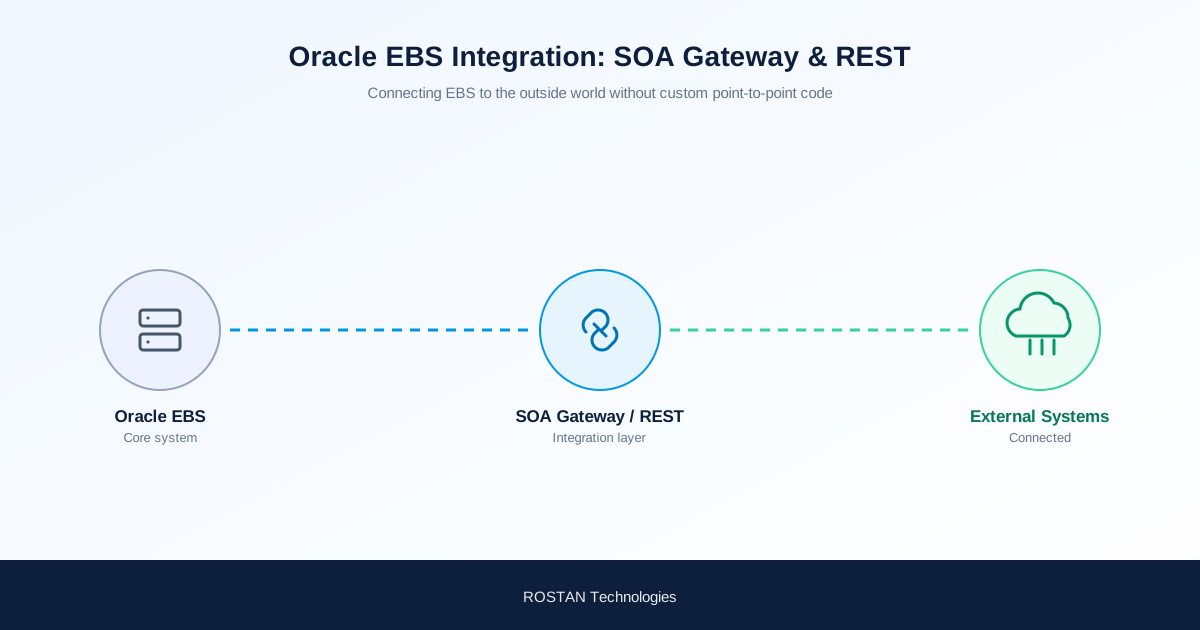
The Integrated SOA Gateway (ISG) is EBS's native framework for exposing and consuming services. It lets you publish EBS business interfaces — PL/SQL APIs, concurrent programs, business events — as SOAP and REST services with a governed, secured contract, rather than reaching into tables directly. For any real-time inbound or outbound integration, ISG is the supported, upgrade-safe path.

Choosing the right pattern

  • Real-time request/response (a portal calling EBS, EBS calling a tax IRP): REST or SOAP services via ISG.
  • Event-driven (something happened in EBS, notify another system): EBS Business Events, often via ISG.
  • High-volume batch (nightly GL loads, mass conversions): open-interface tables and standard import programs remain the right tool — do not force batch through a real-time API.

Anti-pattern to retire: custom integrations that INSERT straight into EBS base tables. They bypass validation and business logic, and they break on upgrade. Use the published APIs and interfaces instead.

Where middleware earns its place

Once you have more than a handful of integrations, a middleware or integration layer (Oracle Integration Cloud or equivalent) is worth it: it centralises connectivity, error handling and monitoring, so a failed tax submission raises an alert instead of disappearing into a log nobody reads.

Related: statutory integrations are a common driver — see e-invoicing integration and digital signature integration with Oracle ERP, plus the Oracle EBS knowledge hub.

Integrations turning into a tangle?

We replace fragile file-and-table integrations with governed ISG services and a clean integration layer — real-time where it matters, batch where it belongs.

Talk to an EBS Specialist

Related service

Oracle Fusion Cloud & EBS

We implement Oracle Fusion Cloud and support Oracle E-Business Suite. If someone is telling you EBS is end-of-life, read this first — Oracle has committed Premier Support through at least 2037.

See our Oracle ERP services

Frequently Asked Questions

The Integrated SOA Gateway (ISG) is Oracle E-Business Suite's native framework for exposing and consuming services. It publishes EBS business interfaces — PL/SQL APIs, concurrent programs and business events — as governed, secured SOAP and REST services, so integrations use a supported contract instead of reaching into tables directly.

It depends on the exchange. Real-time request/response (a portal calling EBS, or EBS calling a tax portal) suits REST or SOAP services via the Integrated SOA Gateway. High-volume work such as nightly GL loads suits open-interface tables and standard import programs. Do not force batch volumes through a real-time API, or real-time needs through nightly files.

Writing straight into EBS base tables bypasses Oracle's validation and business logic, can corrupt data, and breaks when an upgrade changes the schema. Use the published APIs, open interfaces and Integrated SOA Gateway services instead — they are validated and upgrade-safe.

Not for one or two integrations, but once you have several it pays off. A middleware or integration layer such as Oracle Integration Cloud centralises connectivity, error handling and monitoring, so failures raise alerts rather than disappearing into logs — which matters most for statutory integrations like tax and e-invoicing.
Virender Kumar — Head of Cloud & Database, ROSTAN Technologies
Written & reviewed by
Head of Cloud & Database, ROSTAN Technologies
Virender Kumar leads the cloud and database practice at ROSTAN Technologies, covering Oracle Database administration, Oracle Cloud Infrastructure (OCI) and enterprise cloud migration. More from Virender →

Have questions about Oracle, AWS or Cloud?

Talk to our certified experts — free consultation, no commitment.


You May Also Know About
Back to Top
ROSTAN Support
Online · Typically replies instantly
WhatsApp Chat directly, fastest response Call Us +91-9810958952 Email Us info@rostantechnologies.com Send a Message Fill the contact form
Chat with us