Trusted Digital Transformation Partner
E-Invoicing on Oracle ERP
Statutory e-invoicing has become an ERP problem, not a bolt-on. Across India, the GCC and Southeast Asia, the invoice your Oracle system produces now has to satisfy a tax authority before it is valid — here is that landscape, mapped to what Oracle Fusion Cloud and E-Business Suite actually have to do.
Overview
A decade ago an invoice was a document you sent to your customer. Today, in a growing list of countries, it is a document a government platform must see, validate and stamp before it is legally an invoice at all. That shift moves compliance out of the finance back-office and into the ERP, because the controls — real-time submission, unique-identifier storage, deadline enforcement, printed government QR codes — have to live where the invoice is born.
Almost every national mandate is a variation on one of two models. In the clearance model (India, Saudi Arabia, Malaysia) the tax authority or its platform registers each invoice at issuance and returns a unique identifier without which the invoice is invalid. In the post-audit model the invoice goes straight to the buyer and is audited later. A newer decentralised-clearance variant, built on Peppol, has accredited providers exchange and report invoices — the direction the UAE and the EU are taking. Knowing which model a country uses tells you what it will demand of your Oracle estate before you read a line of its spec.
This cluster collects the practical engineering guidance for running that on Oracle — the India GST integration and its 30-day reporting rule, the Saudi ZATCA and UAE FTA mandates, Bahrain and Malaysia, and the digital-signing layer underneath. The articles cover the general shape; the multi-country architecture that ties them into one Oracle integration layer is where the real design decisions sit.
Articles in this cluster
Each links to the full guide. No gated PDFs — the architecture, the trade-offs and the compliance detail in full.

E-Invoicing Integration with Oracle Fusion Cloud: Complete Guide for Indian Businesses (2026)
Step-by-step guide to connecting Oracle Fusion Cloud ERP with India's IRP portal for GST e-invoicing compliance.
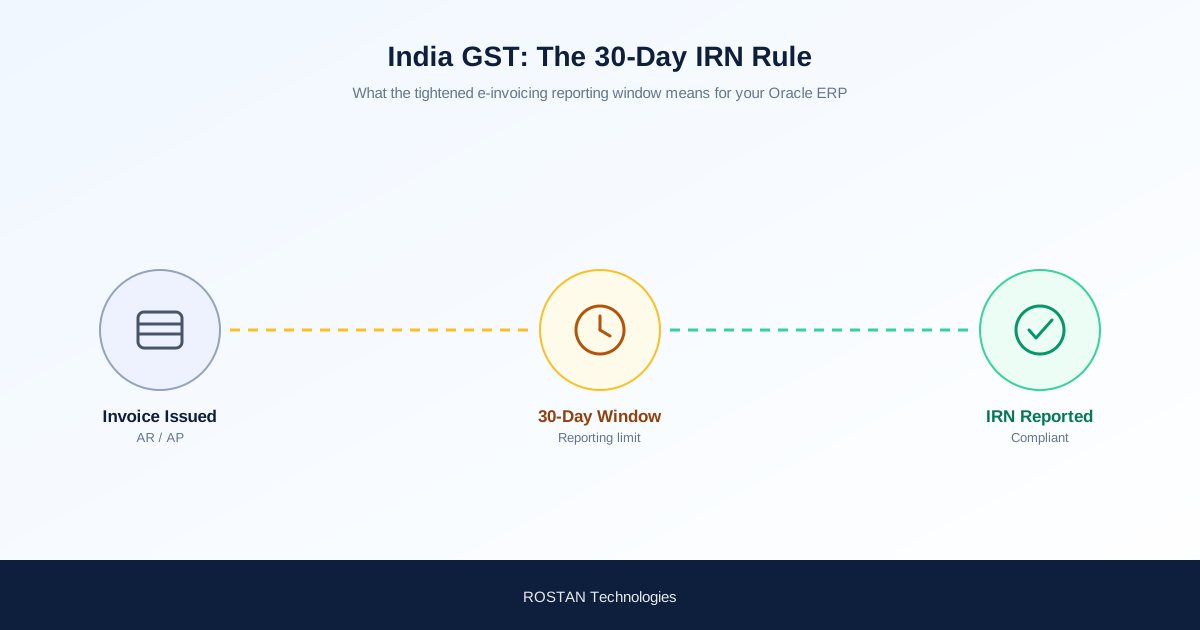
India GST E-Invoicing in 2026: The 30-Day IRN Reporting Rule, Lower Thresholds & What Your Oracle ERP Must Enforce
Since 1 April 2025 the Invoice Registration Portal rejects invoices reported after 30 days, and the turnover threshold n...

Malaysia MyInvois E-Invoicing on Oracle ERP: LHDN Phases, the RM1 Million Threshold & Integration Model
Malaysia's MyInvois runs a near-real-time clearance model through LHDN. Here is the phased rollout, the 2026 RM1 million...
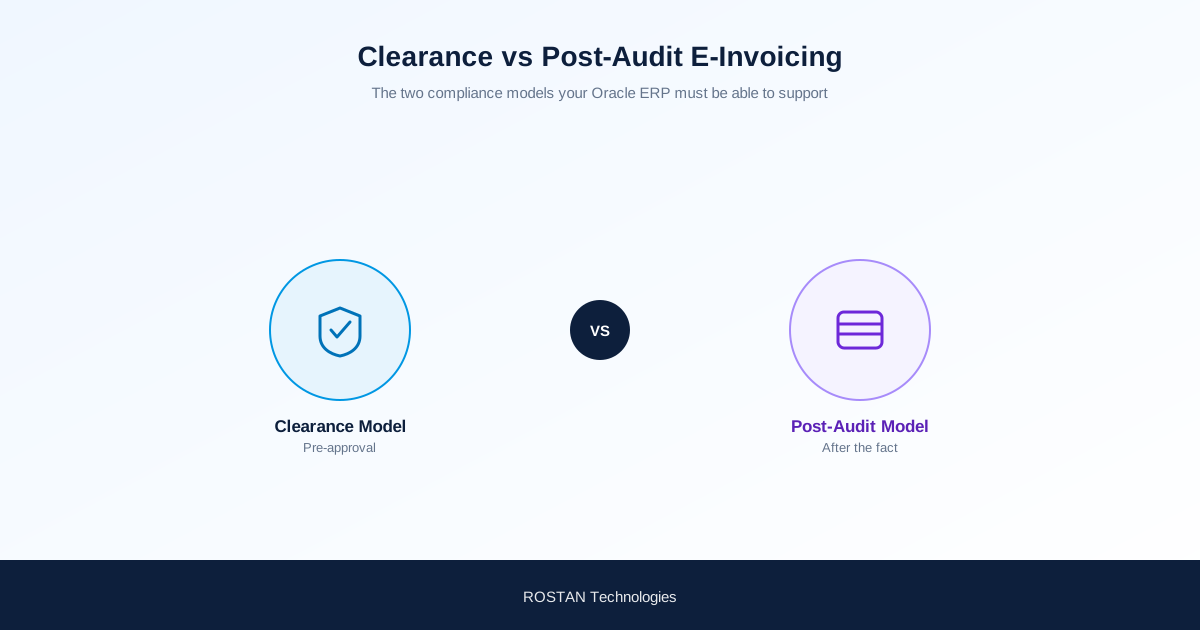
Clearance vs Post-Audit E-Invoicing: The Two Models Your Oracle ERP Must Be Able to Support
India, Saudi Arabia, the UAE, Malaysia and the EU each mandate e-invoicing differently, but almost every regime is built...
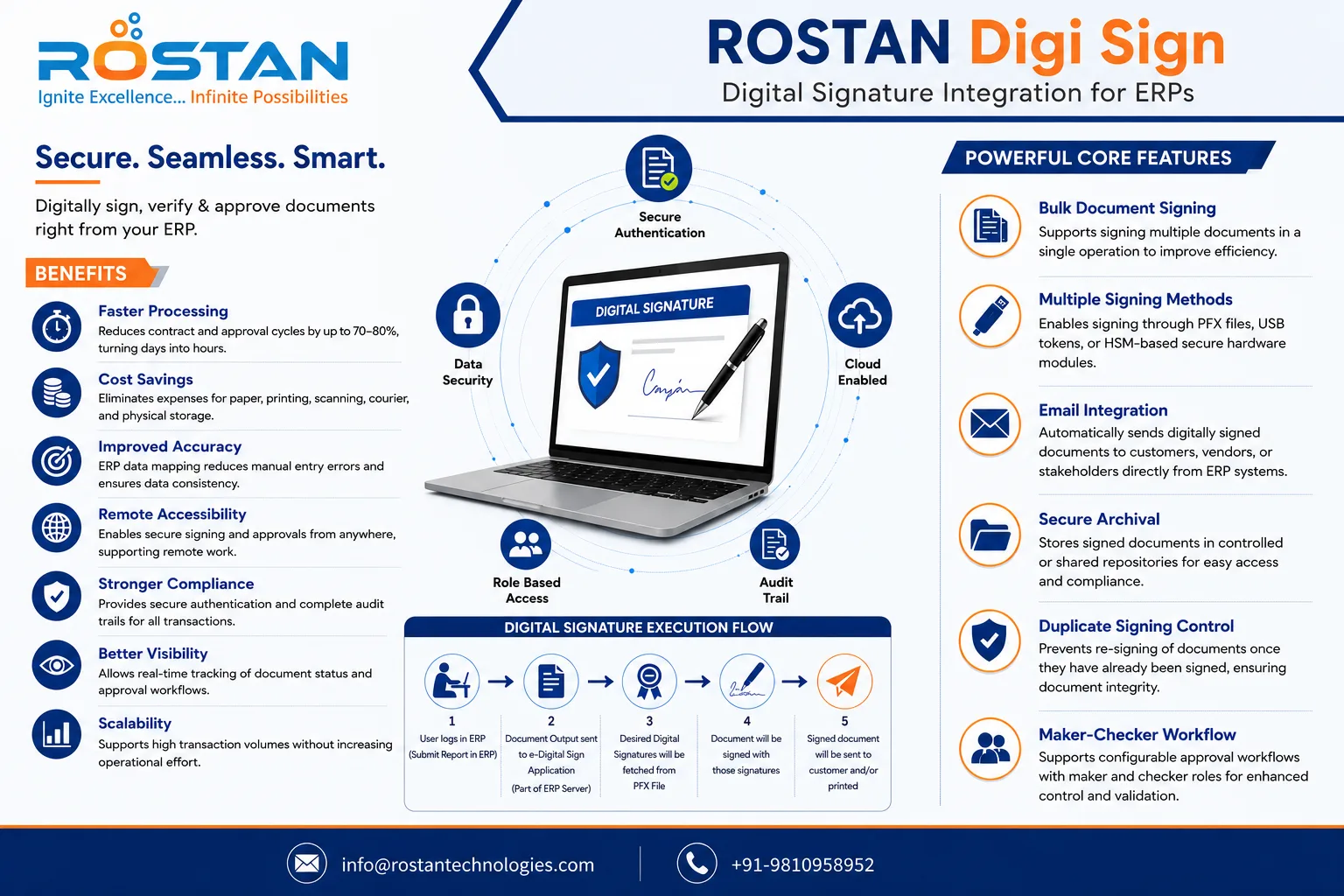
Digital Signature Integration with Oracle ERP: ROSTAN Digi Sign Enterprise Guide 2026
Automate document signing, approvals, and compliance across Oracle EBS, Fusion Cloud, NetSuite & APEX

ZATCA Phase 2 Wave 24: Compliance Checklist for Saudi Arabian Businesses
ZATCA has announced Wave 24 for Phase 2 integration — businesses must connect their ERP to the Fatoora portal by 30 June...

UAE FTA E-Invoicing Mandate 2026: Complete Guide for Dubai and UAE Businesses
UAE FTA e-invoicing targets businesses with AED 50 million+ revenue: ASP appointment by July 31, 2026, mandatory go-live...

Bahrain NBR E-Invoicing: Complete Compliance Readiness Checklist & Implementation Guide (2026)
How Bahraini businesses can prepare for National Bureau for Revenue (NBR) e-invoicing — the GCC pattern, mandatory build...
Frequently asked questions
Which countries' e-invoicing mandates affect an Oracle estate?
Is e-invoicing an ERP project or a bolt-on tool?
Does Oracle Fusion Cloud support e-invoicing out of the box?
What is the difference between clearance and post-audit e-invoicing?
How should a business run e-invoicing across several countries on one Oracle system?
More Oracle topics
This is one cluster of the Oracle Knowledge Hub. Explore the rest:
Facing an e-invoicing mandate on your Oracle estate?
The articles cover the general shape. Your entities, your Oracle version and the countries you invoice in are specific — and that is where the real decisions sit. Talk to the team that wrote these.
- Reviewed by a certified Oracle consultant
- Practical recommendation, not a sales pitch
- Delivering Oracle since 2015