Managing Oracle EBS Customizations (CEMLI): RICEW, Personalizations & Upgrade-Safe Extensions (2026)

Managing Oracle EBS Customizations (CEMLI): RICEW, Personalizations & Upgrade-Safe Extensions (2026)

  • Share This:

Managing Oracle EBS Customizations (CEMLI): RICEW, Personalizations and Upgrade-Safe Extensions

Every long-running Oracle E-Business Suite has them: the customizations that make it fit the business. Managed well, they survive upgrades. Managed badly, they are the reason an upgrade slips six months. Here is the discipline.

What CEMLI actually means

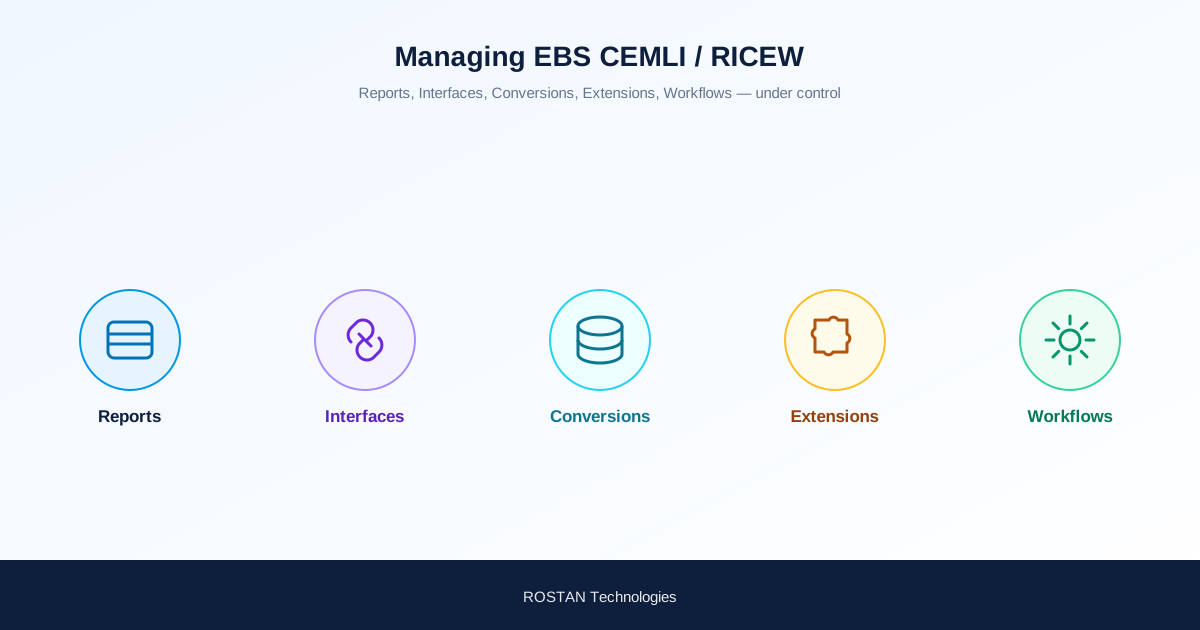
CEMLI is Oracle's umbrella term for everything you add to a standard EBS install: Configuration, Extension, Modification, Localization and Integration. In day-to-day delivery you will also hear RICEW — Reports, Interfaces, Conversions, Extensions and Workflows — which is the developer-eye breakdown of the same territory.

The distinction that decides your upgrade pain

The single most important line in an EBS estate is between a personalization and a customization:

  • Personalizations (Forms Personalization, OA Framework personalization) change behaviour without altering Oracle's seeded code. They are stored separately and generally survive patches and upgrades intact.
  • Customizations that modify seeded objects — editing a standard form, package or report in place — are fragile. A patch can overwrite them, and every upgrade has to re-apply and re-test them.

Rule: prefer personalization over modification, and keep custom code in a dedicated custom schema and custom top, never mixed into Oracle's. The estate that follows this upgrades in weeks; the one that does not upgrades in quarters.

A CEMLI register is not optional

You cannot upgrade safely what you have not catalogued. A living CEMLI register — every object, its type, its purpose, its owner and whether it is still used — is the first thing we build on any EBS engagement. It is also where the easy wins hide: most long-lived estates carry customizations that no longer serve any process and can simply be retired, shrinking the upgrade surface.

Related: a clean CEMLI inventory is also what makes the big decisions tractable — see our guides to the EBS 12.1 to 12.2 upgrade and EBS to Fusion Cloud migration, and the wider Oracle EBS knowledge hub.

Untangling a heavily customized EBS?

We inventory your CEMLI estate, separate the upgrade-safe from the fragile, and retire what is dead weight — so your next patch or upgrade is predictable.

Talk to an EBS Specialist

Related service

Oracle Fusion Cloud & EBS

We implement Oracle Fusion Cloud and support Oracle E-Business Suite. If someone is telling you EBS is end-of-life, read this first — Oracle has committed Premier Support through at least 2037.

See our Oracle ERP services

Frequently Asked Questions

CEMLI stands for Configuration, Extension, Modification, Localization and Integration — Oracle's umbrella term for everything added to a standard E-Business Suite install. Developers often use the related RICEW breakdown: Reports, Interfaces, Conversions, Extensions and Workflows.

A personalization (Forms or OA Framework) changes behaviour without altering Oracle's seeded code and is stored separately, so it usually survives patches and upgrades. A customization that modifies seeded objects in place is fragile — patches can overwrite it and every upgrade must re-apply and re-test it. Prefer personalization wherever possible.

Any code that modifies Oracle's seeded objects must be re-applied and re-tested after each patch or upgrade, because Oracle's updates can overwrite it. The more in-place modifications an estate carries, the longer and riskier every upgrade becomes — which is why upgrade-safe personalization and a dedicated custom schema matter so much.

A CEMLI register is a living catalogue of every customization in your EBS estate — its type, purpose, owner and whether it is still used. You cannot upgrade safely what you have not catalogued, and the register routinely reveals customizations that no longer serve any process and can be retired, shrinking the upgrade surface.
Virender Kumar — Head of Cloud & Database, ROSTAN Technologies
Written & reviewed by
Head of Cloud & Database, ROSTAN Technologies
Virender Kumar leads the cloud and database practice at ROSTAN Technologies, covering Oracle Database administration, Oracle Cloud Infrastructure (OCI) and enterprise cloud migration. More from Virender →

Have questions about Oracle, AWS or Cloud?

Talk to our certified experts — free consultation, no commitment.


You May Also Know About
Back to Top
ROSTAN Support
Online · Typically replies instantly
WhatsApp Chat directly, fastest response Call Us +91-9810958952 Email Us info@rostantechnologies.com Send a Message Fill the contact form
Chat with us